Introduction
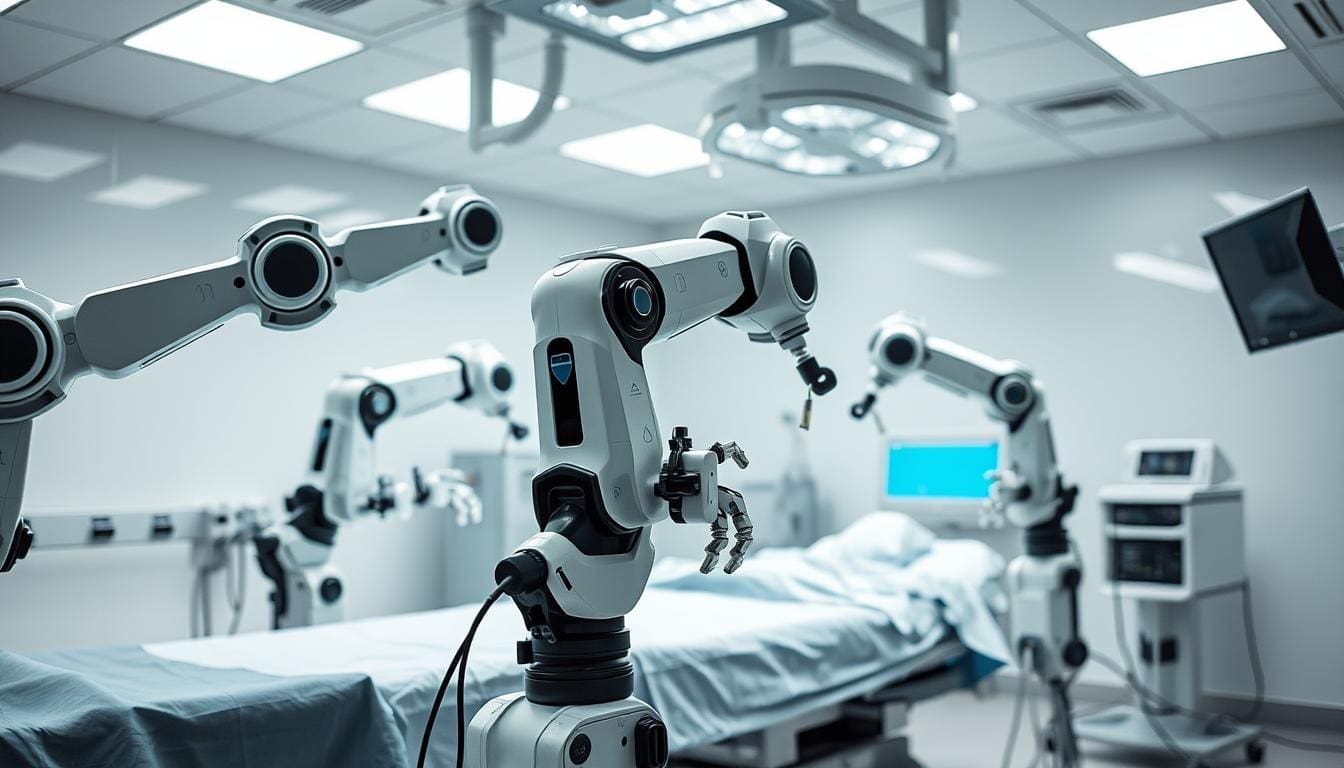
The field of healthcare is experiencing one of the most far-reaching changes in the modern history. The growing number of patients, the growing demands on the health workers, and the necessity to make the decisions in a correct and real-time have compelled hospitals to look further. This is where AI-powered healthcare robotics is leaving a tangible impact. Healthcare robotics is transforming the manner in which patient care is administered, observed, and enhanced by integrating artificial intelligence, automation, and smart data processing.
The robotic systems powered by AI today are not created to substitute the healthcare worker; on the contrary, they are intended to assist them and contribute to more accurate data collection, workload reduction, and faster clinical reaction to the collected data. With the evolution of healthcare to smarter and more data-driven settings, AI-driven robotics are becoming the key component of current patient care.
What is AI-Powered Healthcare Robotics?
AI-powered healthcare robotics are defined as robots that combine robotic systems with artificial intelligence algorithms enabling machines to perceive, learn and assist in a medical setting. These systems have the ability to analyze data, adjust to new circumstances, and support healthcare providers in real-time unlike the old form of automation.
These robotic solutions operate across multiple healthcare functions, including:
- Patient monitoring and assistance
- Surgical support and precision tasks
- Medication management
- ICU monitoring and data analysis
- Remote healthcare and diagnostics
The integration of AI in healthcare robotics allows hospitals to move from reactive treatment models to proactive and preventive care systems.
Enhancing Patient Safety Through Intelligent Automation
Making healthcare robotics AI-powered is among the contributions that greatly enhance patient safety. The nature of medical settings is complicated, and exhaustion, workload, or time pressure may result in human error. Robotics based on AI can aid in minimizing such dangers because it offers round-the-clock surveillance and smart warnings.
As an illustration, AI-based monitoring robots are capable of monitoring patient vital signs round the clock and identifying anomalies before they escalate to severe levels. Rather than using periodic manual checks, healthcare teams are alerted in time, thus being able to intervene in a shorter period.
The capability is especially useful in high-dependency units and in intensive care settings where delays can have a significant effect on patient outcomes even a small delay can influence patient outcomes. Robotics helps to improve clinical awareness lastly, and the process of decision-making, by providing healthcare professionals with real-time insights.
Supporting Healthcare Professionals and Reducing Workload
Workload to healthcare staff globally is on the rise particularly in the critical care units. Time wasting in administration, repetitive surveillance and regular physical interaction with the patient is a common occurrence that deprives the direct engagement with the health care recipient. Healthcare robotics can be used to tackle this problem because it automates repetitive tasks.
Robot-powered systems based on AI can help with:
- Routine patient monitoring
- Equipment handling and logistics
- Data recording and analysis
- Automated alerts and reporting
Through automated manual work, health care system operators will be able to concentrate more on diagnosis, communication with patients, and complicated care decisions. Such a compromise between human skills and intelligent robots will enhance the efficiency and quality of care.
The adoption of healthcare automation solutions is therefore not only about technology advancement but also about improving the working environment for medical teams.
Conclusion
The use of AI-based healthcare robots is no longer a speculative idea, it is a reality in the contemporary world. With better monitoring precision, empowering healthcare workers, and facilitating proactive medical reactions, intelligent robotics is assisting healthcare systems to provide safer and more effective care.
At Mamaleintelligence.com, it is about applying intelligence in the real-world healthcare context. With the development of AI, research-based healthcare robotics, and smart monitoring solutions, the idea is to connect innovation with the real world. Mamaleintelligence will develop settings where technology makes humans more able and patient outcomes are better and more constant by developing AI systems that complement the work of healthcare professionals.
With healthcare in its current development, the organizations that adopt applied AI and intelligent automation will be on the path to the smarter, safer, and more connected future of patient care.