How Intelligent Monitoring Saves Critical Time
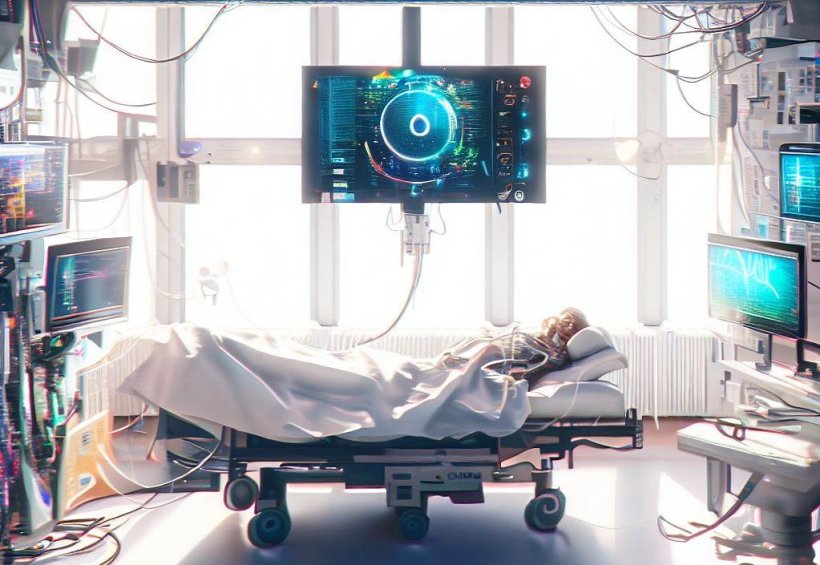
Every second counts in an Intensive Care Unit (ICU). Critical care patients need to be monitored at all times since they can deteriorate very quickly. Nurses and doctors have to operate under high pressure, working with several patients simultaneously, monitoring vital signs, alarms, and treatment reactions. AI in ICU monitoring has been used in such high-risk settings to assist healthcare staff in making quicker, superior judgments and enhancing patient care.
Medical experts are not being replaced with artificial intelligence. Rather, it works in their favour by offering them smart monitoring, early alerts, and real-time information that saves the most important time when it is needed the most.
What Is AI in ICU Monitoring?
AI in ICU monitoring is the application of artificial intelligence and smart monitoring devices to monitor patient health continuously. These systems scan information like heart rate, oxygen levels, blood pressure, breathing patterns and other vital signs in real time.
In contrast to the traditional monitoring systems that merely show the information, AI-powered systems can:
- Analyze large amounts of patient data instantly
- Detect unusual patterns early
- Send smart alerts to healthcare staff
- Help predict possible complications
This allows healthcare professionals to respond earlier instead of waiting for visible symptoms to appear.
Why Time Is So Important in ICU Care
ICU patients are not always in good condition. Minor fluctuations in vital signs are fast becoming severe unless corrective action is taken immediately. Historically, the medical personnel is forced to manually observe screens and alarms when attending to many patients simultaneously. This puts the risk of slowing the responding time due to workload or alarm fatigue.
The solution to the specified issue is provided by AI-controlled ICU monitoring, where all changes in patients are constantly analyzed and only significant ones are indicated. Doctors and nurses will be able to act early instead of reacting to the situation late.
Saving even a few minutes in critical care can:
- Prevent medical complications
- Reduce emergency interventions
- Improve recovery chances
- Lower patient risk
This is why intelligent monitoring is becoming essential in modern ICUs.
How Intelligent Monitoring Works in the ICU
The AI-based surveillance systems capture information on the medical devices that the patient is attached to. The AI system then learns and compares the patterns with historical and real-time data.
For example:
- If oxygen levels begin to drop slowly, AI can detect the trend before it becomes dangerous.
- If heart rate changes indicate possible deterioration, the system alerts staff early.
- If multiple parameters change together, AI identifies risk faster than manual observation.
This process helps healthcare teams focus on patients who need immediate attention instead of constantly checking every monitor.
Conclusion
AI in ICU monitoring is revolutionizing the field of critical care, giving the teams valuable time to save. AI can enable physicians and nurses to react quicker and make superior choices using intelligent alerts and constant monitoring as patients require it the most.
The vision of Mamaleintelligence is to create intelligent healthcare solutions that add value to hospitals and medical workers in real life. Through the innovation of AI and its application in the field of healthcare, it is hoped to develop a system of monitoring that is beneficial to clinical teams, helps improve efficiency, and can make patients safer.
With the transformation of healthcare to smarter and more connected systems, intelligent ICU monitoring will be instrumental in providing patients with faster, safer and more reliable patient care